Napoleons
Biographies
_______________






Page 2
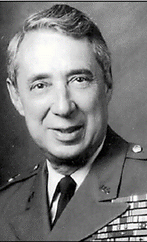
Harold E. Stark – XXXV
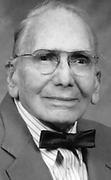
Alan S. Galbraith – XXXVI
Alan Stuart Galbraith was born July 15, 1904, in Guelph, Ontario. A graduate of the University of Alberta, in 1930 he received his M.A. in Mathematics and his Ph.D. in 1937, both from Harvard University. “After holding various teaching positions at Harvard, Colby College and the University of Rochester he joined the staff of the Exterior Ballistics Laboratory, Aberdeen Proving Ground, MD in 1946 and later became Chief of the Theory Branch.” In 1956 he relocated to Florida where he served as Physical Science Administrator, Directorate of Ballistics, Air Force Ammunitions Center at the Air Force Research and Development Command, Eglin Field until 1958. His next position was as Associate Chief for Computers and Mathematics, Data Systems Division at the Goddard Space Flight Center at the National Aeronautics and Space Agency in Greenbelt MD. Galbraith’s next appointment was as Director of the Mathematics Division, Army Research Office in Durham, NC in June 1961. He held the position of Deputy Chairman of the Army Mathematics Steering Committee and was a member of the Mathematical Association of America.
With such a stellar background in mathematics it should come as no surprise that the subject he chose for his contribution to the 1957 Baker Street Journal Christmas Annual was “The Real Moriarty.” As he wrote, “To the professional mathematician there is a certain fascination in the picture of Moriarty, the archvillain, as a brother in his scientific fraternity.” Galbraith died January 1, 1990, in Lakewood, New Jersey.
(Julie McKuras)
Washington Platt – XXXVII
Washington Platt was born October 6, 1890, in Baltimore. He was a member of the 1908 class of Philips Academy, Andover, a 1911 graduate of Yale University, and a medical student for one year at Johns Hopkins. During World War I he held the rank of captain in a chemical unit of the AEF. Platt received a master’s degree in chemical engineering in 1921 and relocated to Syracuse NY in 1922. He was service department manager of Merrell-Soule Company, and after the company was purchased by the Borden Company. He was named assistant director of research laboratories. In June 1941 he left civilian life for the military. Lt. Colonel Platt, Chemical Warfare Service officer and Assistant chief of staff, was a member of the Seventh Army’s 19th General Staff Corps before his appointment as armored force intelligence officer in 1943. On June 10, 1944, his unit landed in Normandy and made their way across Europe into Germany. He was awarded the Legion of Merit for his perfection of “the organization of an intricate intelligence network, provided clear, concise, and timely information of enemy dispositions and intentions…to combat units establishing them to fight more efficiently with minimum loss of life.” (Phillips Academy website) He was also awarded the Bronze Star Medal with Cluster by the U.S. and the Croix de Guerre with palms, making him a member of the Legion of Honor, by France.
Postwar, Platt returned to Syracuse and was named Professor of Administrative Engineering at Syracuse University and later the department chair. He remained active with the military and held the position of division of chief of staff and later commander of the 98th division of the reserve corps and was a proponent of the goals of the United Nations as well as increased interest in national security. After his 1951 resignation from his university post he authored several books on security, Strategic Intelligence Production: Basic Principles in 1957 and National Character in Action: Intelligence Factors in Foreign Relations in 1961. His obituary noted that he “helped establish the Central Intelligence Agency (CIA) as a civilian consultant…and [was] a recipient of Guggenheim Fellowships twice” including his 1958 fellowship in U.S. History.
In addition to the Six Napoleons, Platt was a member of The Technology Club of Syracuse, Yale Engineering Association, The Cazenovia Club, American Institute of Chemical Engineers, and served as a trustee of the Syracuse Museum of Fine Arts.
Brig. General Platt suffered a heart attack on May 17, 1965, while flying to England. He died two days later in London.
(Julie McKuras)
Henry H. Adams – XXXVIII
Henry Hitch Adams was born in Ann Arbor on March 26, 1917. He graduated from the University of Michigan in 1939 and “later earned his M.A. and Ph.D. from Columbia University.” Adams served in the U.S. Navy from 1942-1945 on board the destroyer escort the U.S.S. Owen where he “saw the war first hand” and was “involved in 15 major sea battles in the Pacific.” After the war he became an instructor at Cornell University and in 1951 left for the Naval Academy in Annapolis. In 1962 was named to the staff of Naval Reserves Officers School. He was noted as “a civilian instructor in the Naval Academy’s department of English, history and government. He will be teaching the course in national strategy and cold war.” In 1965 he assumed command of the Baltimore-Annapolis Naval Reserve Office school while serving as a history professor at the Naval Academy. Adams left the Naval Academy in 1968 to take the position of English Department Chairman at Illinois State University while maintaining his rank as a captain in the Naval Reserves. He stayed there until 1973 when he returned to the Naval Academy to “resume full-time writing,” the same year that he and his wife Catherine started a travel agency. They moved to St. Petersburg in 1978 and then to Oklahoma City in 1999.
Among the naval historical books he wrote were 1942: The Year That Doomed the Axis; The United States and World Sea Power; Sea Power: A Naval History; The Great Sea War; Triumph in the Pacific; Triumph in the Atlantic; Harry Hopkins: A Biography; Witness to Power: The Life of Fleet Admiral William D. Leahy; and Years of Expectation: Guadalcanal to Normandy. “He has also contributed to the Encyclopedia Britannica and has written a number of books in the literature field” such as Dramatic Essays of the Neoclassic Age and English Domestic or Homiletic Tragedy and book reviews for the Chicago Sun Times and the Washington Star. He was a member of the American Historical Association, the Modern Language Association, the Secretary of the Navy’s Naval Reading Program Committee, the Board of Directors of the Annapolis Fine Arts Festival, and served a two-year term as president of the College English Association. Adams died on August 22, 2002, in Oklahoma City.
(Julie McKuras)
Paul White – XXXIX
Paul David White was born July 13, 1921, in Sharpsville, PA. He worked as a commercial printer before he enlisted in the U.S. Navy. In 1943 he attended Wooster College Flight Prep School in Wooster OH before being assigned to Santa Rosa CA. He flew an Avenger Torpedo Bomber while serving aboard the aircraft carrier, the USS Hancock. “His decorations included the Navy Cross for heroism during combat and the Air Medal with Gold Star. When Japan signed the surrender on Sept. 2, 1945, aboard the battleship USS Missouri in Tokyo Bay, he was part of the contingent of 1,000 airplanes that flew overhead to mark the event.” He was discharged from active service in December 1945 and went on to earn a bachelor’s degree in journalism in 1948 from the University of Missouri. He began his career as a Louisville Courier Journal reporter and came to the Evening Sun as a copy editor in 1953 and “held various editing positions, including telegraph editor, until he retired in 1986.” During his time at the newspaper, he was remembered for always wearing a bow tie and starched white shirts. He and his wife lived on a farm they called Cedardane on Cedarlane in Kingsville where they bred, showed and sold Great Danes.
White was the author of “The Case of the Men named James” which appeared in the January 1956 Baker Street Journal. He died May 25, 1998 at his Kingsville farm.
(Julie McKuras)
Philip Sherman – XL
Philip Sherman was born April 29, 1927 in Baltimore and graduated from Polytechnic Institute in 1945. After a brief time at the U.S. Merchant Marine Academy in NY, he enlisted in the U.S. Army in October 1946 and served in the Signal Corps for one year. He earned an associate degree in 1949 after his discharge, and a law degree from the University of Baltimore in 1953. Along with a fellow attorney, they founded the Museum of Baltimore Legal History in 1984 and served as the Historian of the Baltimore City Bar Association as well as editing the Maryland State Bar newsletter Pearls of Wisdom. He was also a board member of the Jewish Museum of Maryland and the Patriots of Fort McHenry and served as the president of Jewish Historical Society. His other interest was Edgar Allan Poe.
Sherman’s “career with the Maryland National Guard spanned more than four decades.” In a November 18, 1963, article in the Baltimore Sun he noted his father Abe Sherman, a decorated veteran who served in 2 World Wars, encouraged patriotism in his sons. In 1985, he received a Joint Service Commendation Medal from Secretary of Defense Caspar W. Weinberger.
Rising through the ranks, in March 1987 he was promoted to the rank of Brigadier General of the Army National Guard; his father pinned the star on his uniform. Sherman was also the recipient of the Legion of Merit, the Maryland Distinguished Service Cross and was named as State Director of Selective Service System for Maryland. He retired from the Maryland National Guard in 1987.
The first book Sherman bought with his own money was The Complete Adventures of Sherlock Holmes. After joining the Six Napoleons, he “launched the series of Holmesian lectures at the [Pratt] library.” He was also the founder of the group The Sign of Four. In 1969 he received the titular investiture of “The Six Napoleons” from the Baker Street Irregulars in 1969 and the Two-Shilling Award for “extraordinary devotion to the cause beyond the call of duty” in 1984. Sherman continued to work as an attorney until he passed away on March 10, 2008, in Baltimore.
(Julie McKuras)
Ralph E. Edwards – XLI
Ralph Ernest Edwards was born June 3, 1911, in Buffalo, NY. He received his master’s degree in 1935 from the University of Michigan and was a member of the American Mathematical Society. In 1949 he went to work for the Baltimore Life Insurance Co. as an actuary. By 1953 he’d risen to the position of Director and Actuary and by 1959 was a Vice-President. He retired from Baltimore Life Insurance Co. in 1976 and took on the post as director of the new program in actuarial study at Loyola.
Edwards had many interests. He was a long-time member of the Dixie Mystics of Baltimore and was named Mr. Ree, the president of the National Puzzlers League in 1951. He belonged to the American Civil Liberties Union and succeeded Napoleon Carl Bassett as chairman of the executive board of the group in November 1951. A member of the Middle Atlantic Actuarial Club, he was named president in November 1954. In 1964 he was elected to a three-year term on the board of governors of the Society of Actuaries after serving on the society’s committee on papers and was publisher of a monthly periodical, The Actuarial Record for three years in the mid 1960s. He and his wife were both actuaries and “In 2002 the couple endowed the Ralph E. and Norma L. Edwards Research Professorship in mathematics at Norma’s alma mater, the University of Kentucky.” He was also a member of the University of Michigan Club in Baltimore and was described as a “train buff” and a “noted railroad enthusiast.”
Edwards received the investiture of "Dr. Barnicot" from the Baker Street Irregulars in 1963 and the Two-Shilling Award in 1983. He was the founder of the Carlton Club in Baltimore. Ralph E. Edwards died April 2, 2008, in Baltimore.
(Julie McKuras)
Ralph A. Ashton – XLII
Ralph Andrew Ashton Jr. was born June 10, 1913, in Lewiston ME. He graduated from the University of New Hampshire and the Boston University School of Law. He and his family moved to New Hampshire where he worked as a lawyer in his own practice before moving to Massachusetts. In 1953 he was named educational manager for American General Insurance Company in Baltimore. In 1960 he began teaching a course in Property and Casualty Insurance Preparation for the Insurance Agents’ Examinations for McCoy College, then the evening college of Johns Hopkins University. He became a member of the Freemasons in 1949 at the Boston University Lodge and belonged to St. Andrew Society of Baltimore. Ashton died January 23, 1970 in Baltimore.
(Julie McKuras)
Charles Wheeler – XLIII
Dr. Charles Wheeler was an assistant medical examiner for Baltimore. In the spring 1956 meeting of the Six Napoleons, Dr. Wheeler gave those assembled a “delightful tale of murder, mystery and mischief, here and in Denver.”
(Julie McKuras)
Howard C. Will – XLIV
Howard Christian Will, Jr. was born March 21, 1927, in Baltimore, MD and attended Polytechnic Institute. After his Navy duty in Alaska and California, he graduated from Loyola. While studying at Johns Hopkins University as a graduate student in history, he turned to a job as an architectural draftsman. While trying to decide It was during this time that he “drifted into a Great Books group at the Pratt Library” and before long was “spending 35 hours a week on this hobby of his.” In October he accepted an offer from Great Books and moved to Memphis TN to launch “his new career as the first full-time director of the Great Books Program in the South.” He traveled extensively through the South to organize, support, and lead classes for new groups for the program. By 1966 he’d accepted the post of National Program Director at the group’s headquarters in Chicago and two years later, as Western Program Administrator of Great Books with an office at the San Francisco Public Library. He retired as Vice President of Great Books and moved to Castro Valley, CA where he later died on May 15, 2012.
(Julie McKuras)
Stephen B. Campbell, III – XLV
Arthur M. Weber – XLVI
Arthur Murray Michael Weber was born January 7, 1925, in Baltimore, MD. After graduating from Baltimore City College in 1943, he joined the U. S. Navy and rose to the rank of Lt. JG in the Navy and Naval Reserve, serving in both World War II and Korea. He received his B. Arch. from the Catholic University of America in 1951. He worked as a draftsman for a number of architectural firms and was associated with Alexander S. Cohen Associates in Baltimore working on a number of commercial buildings. He was a member and Fellow of the American Institute of Architects.
Weber died on February 8, 2006, in Honolulu, Hawaii. He is buried in the National Memorial Cemetery of the Pacific.
(Julie McKuras)
P. Stephen Clarkson, Jr. – XLVII
Paul Stephen Clarkson, Jr. was born November 17, 1938 in Baltimore, MD. He graduated from the University of Maryland with a degree in English in 1962. After graduating he went to work for the Social Security Administration. He remained with the agency until 1993, “becoming a senior health and human services analyst” and helped to “write the first regulations for Medicare and served as a liaison between the White House and the Social Security Administration.” In 2002, he moved away from Baltimore to “a mountain top cabin in Berkeley Springs [WV].”
A second-generation Sherlockian, at the age of eight he was introduced to Sherlock Holmes by his father, Paul S. Clarkson, Napoleon II. Steve started The Board School Beacons as a result of taking on the task of answering letters from young people who sent inquiries about the BSI. He co-founded the Cavendish Squares and was a founding member of Watson’s Tin Box.
The members of Watson’s Tin Box “honored their quizmaster Steve Clarkson alias Torquemade for all his efforts at constructing diabolical questions for the monthly meetings…”
Clarkson wrote “The Man-Eater of Jahlreel” in 1970, the same year he received the investiture of “Morse Hudson” from the Baker Street Irregulars. The June 1972 of the Baker Street Journal contained his article “Another Case of Identity.” His Sherlockian Chamber was published in 1996, and The Canonical Compendium in 1999. In 2003 he authored Baker Street Journal Christmas Annual: The Strength and Activity of Youth. Watson’s Tin Box awards “The Clarkson Award” for their annual Sherlock Holmes essay contest for seventh graders.
Clarkson died on October 19, 2004, in Berkeley Springs WV.
(Julie McKuras)
Marshall H. Pinnix – XLVIII
Marshall Henry Pinnix, Sr. was born January 12, 1927, in Oxford, NC. He graduated with a degree in accounting from the University of North Carolina at Chapel Hill in 1949, then moved to New York City where he took a position with Texaco. Fluent in Spanish and French, “[h]e lived in Puerto Rico and Dakar, Senegal before leaving Texaco and moving to Baltimore in 1955.” He worked as assistant vice president for the Mercantile Safe Deposit and Trust Co. before leaving the company in the early 1980s for a group manager position at Alexander & Alexander, Inc., now known as AON Corp. In January 1989 he was promoted to senior financial analyst and held that position until his retirement in 1992. He was the co-author of Practical Security Analysis and the author of Insurance in the United States; A Handbook for Professionals, published in 1993. He was also a “consultant to the World Bank and the Excess Line Association of New York, a quasi-state government agency that regulates certain types of insurance operations” in New York state. Pinnix enjoyed “opera, reading, watching college football and travel” and visited more than 50 countries, often traveling to London several times a year for business. For many years he volunteered at Helping Up Mission in Baltimore, tutoring men who were in alcohol and drug addiction recovery with skills in math, reading and writing.
In addition to the Six Napoleons, Pinnix was a member of The Carlton Club and The Oxbridge Scholars of Baltimore. In a 1980 interview with the Baltimore Sun, in which he was described as “a soft-spoken, mild-mannered, patrician financial analyst,” he explained his attraction to the Canon, noting “It transports you back to the more attractive aspects of the Victorian era – the orderliness, the sense of fair play.” At various scion meetings he was remembered for his “quiz questions, which were infinitely convoluted mathematical problems, the subjects of many groans among the countless number of meetings he attended.” Pinnix passed away on December 8, 2007 in Baltimore.
(Julie McKuras)
David Shay – XLIX
David Earl Shay was born October 5, 1928, in Erie PA. He received a B.S. in economics from the University of Pennsylvania’s Wharton School of Finance and Commerce, Class of 1951, where was active in Sigma Nu and secretary of Finance Society. Shay “served twice in the army as a paratrooper in the 82nd Airborne Division and as a combat infantry officer in the Korean Conflict.” He attained the rank of second Lieutenant and was captured in Korea and held prisoner from September 1952-September 1953. After the war he was employed by Merrill, Lynch, Pierce, Fenner & Smith in New York City before taking the position of assistant treasurer of the Maryland Casualty Company in Baltimore. In 1959 was named resident manager of Goldman, Sachs and Associates but left in 1967 to become manager of Gruntal & Co.
Shay was active in a number of civic and political groups. As director of the Baltimore Junior Association of Commerce, he was named “Outstanding Man of the Year” in 1958. That same year he “organized the film and speakers bureau for the 1958 Community Chest-Red Cross Campaign…and was on the fund-raising committee of the Lutheran Hospital.” Over the years he was vice-president of Baltimore Jaycees, and in January 1964 accepted the general chairmanship for membership for the Baltimore Symphony Orchestra Association where he was described as “very active in civic affairs and very interested in concerts.” Shay was Chairman of both the city Liquor Board and the Off-Street Parking Commission. He was involved with Republican politics and ran unsuccessfully for Baltimore City Council and the State Senate from the Second District as well as acting as vice-chairman of the Republican City Committee.
Shay died December 1, 1997, and is buried in Arlington National Cemetery.
(Julie McKuras)
George R. Bentley, Jr. – L
James C. Morrison – LI
Morrison was born Scottsburg, Il and would go on to serve in the Army Corps. of Engineers in Europe during World War II, where he participated in the Battle of the Bulge. Morrison was noted for his skill in defusing land mines and booby traps, including one instance where Major General George S. Patton observed him at work. Settling in Baltimore after the war, he was a pipefitter and steamfitter. In 1969, after getting his master plumber’s license, he formed his own company – James C. Morrison Plumbing and Heating Company, which he operated until retiring in 1982. He passed away on June 28, 1992, at the age of 88.
(Greg Ruby)
Harold Schutz – LII
Dr. Harold (Harald) Schutz was born June 24, 1907, in Vienna, Austria. He received his degree in Electrical Engineering from the Vienna Institute of Technology in 1929 and his doctorate five years later. He left Austria and resettled in London, where he married, before he came to the United States, entering through Boston in 1938. Schutz moved to Worcester MA and worked for the American Optical Co. according to his draft registration card signed in October 1940. A 1962 newspaper article about him indicates he “joined the faculty at Dartmouth College” sometime after coming to the United States. By 1952 he was the head of the Radio Frequency Engineering Section of the Glenn L. Martin Co. in Baltimore. He later held the post of manager of control and computing systems development programs at the Westinghouse Air Division in Baltimore. In 1966 he was the Deputy Engineering Manager at the aerospace division of Westinghouse and was appointed as a Fellow of Institute of Electrical and Electronics Engineers, which cited him for “contributions to the performance improvement of military electronics and his contributions to the welfare of the engineering profession.” He was also a member of the Maryland Academy of Sciences. Schutz died February 11, 1976, in Baltimore.
(Julie McKuras)
William J. Boland – LIII
Stanley R. Dawson – LIV
Morton Salan – LV
Morton Lee Salan was born December 11, 1919 in Baltimore. He joined the Army Air Corps on December 17, 1941 and rose to the rank of Captain by 1944. After the war he was an executive with the Joseph Katz Company. In 1957 he joined the advertising agency W.B. Doner and Company as an account supervisor for a number of their clients. The April 18, 1968 Evening Sun reported that Salan, who joined the Washington D.C. advertising agency Kal & Merrick, later Kal and Salan Advertising, in 1963, had been elected executive vice president and general manager of the firm. He retired from the agency in 1986 as board chairman and president. During his retirement he acted as administrative manager with the Suburban Hospital anesthesiology department.
Salan “was past president of the Advertising Club of Metropolitan Washington and the Better Business Bureau of Washington.” He died September 27, 2010 in Bethesda and is buried in Arlington National Cemetery.
(Julie McKuras)
John A. Pentz – LVI
John Angelo Pentz was born July 12, 1903, in Baltimore. A graduate of Polytechnic Institute, he earned a B.A. from Johns Hopkins University in 1925, an LLB from the University of Baltimore in 1937, and later a master’s degree in English from Johns Hopkins University in 1951. Pentz began teaching at Jacob Tome School in 1926 but left in 1929 to teach literature, poetry and grammar at City College, where he served as head of the English department and developed the accelerated English program. He remained on the faculty there until his retirement in 1968, winning the Valley Forge Classroom Teachers Medal for teaching responsible citizenship and the American way of life. Pentz was also a member of the University of Baltimore faculty from 1946-1968 “and taught occasionally at Johns Hopkins University.” He moved to St. Michael’s in 1970 where former students would visit and take him out to dinner. Russell Baker, journalist, Pulitzer Prize winner and host of Masterpiece Theater, graduated from City College in 1942 and, described Pentz as a “wonderful teacher” who was “mischievous and his sometime tyrannical manner kept you in awe of him.”
During the 1950s Pentz served a three year term as president of the Society of the War of 1812; vice-president, president, and president emeritus of the Star-Spangled Banner Flag House Association, where he “helped bring the historic Navy ship Constellation from Newport, R.I. to Baltimore in 1955”; registrar and honored life member of the Sons of the Revolution; the Civil War Centennial Commission of Baltimore; and was a member of the Maryland Historical Society, the Historic Society of York County, the Mencken Society, the English Speaking Union, the Wine and Food Society, St. Andrew’s Society, St. George’s Society, and the Johns Hopkins Club. He was past president of the English section of the Maryland Teachers’ Association. At the age of 93 his book The Martinetti Family: The Story of a Nineteenth Century Pantomine Company was published and told the story of his mother’s family. Pentz died July 22, 2002, in Easton MD.
(Julie McKuras)
Anthony F. Nelligan – LVII
Anthony Francis Nelligan was born June 14, 1911, in Baltimore. A graduate of St. Mary’s Star of the Sea and Mount St. Joseph College, he was active with tennis, soccer, and track and went on to coach soccer at the school. He played football while completing a year of post-graduate studies at Calvert Hall before attending Loyola College for two years. Adding to his sporting interests, he “sculled for the Old Arundel Boat Club.” Nelligan worked for the Baltimore Fire Department for three years before joining the city police force in 1939. During his first years with the police Nelligan became interested in using laundry and dry-cleaning identification marks; those marks on a victim’s clothing could help lead to solving a crime. In a relatively short time, he developed his own system amassing a collection of over 600 marks in cooperation with laundry managers. In 1944 he was transferred to the Detective Bureau where he initiated “Nelligan’s Files,” the laundry marks identification section with his own collection as the basis. He was also interested in handwriting and established a document section. In 1945 he was promoted to sergeant. Three years later a one room crime lab was set up and Nelligan, now a lieutenant and graduate from the FBI Police Academy, was named to supervise it. In 1951 the city opened a modern crime laboratory and Lt. Nelligan was named head. He remained with the lab with the rank of Major until 1966 when he transferred to the Central Records Division. He retired one year later. In his obituary it was noted that “In a real sense, the history of the crime lab is the story of Captain Nelligan’s career in the police department.” After his 1967 retirement from the police department he became Chief of Security for the First National Bank of Baltimore. He officially retired in 1969.
The Six Napoleons update which appeared in the April 1960 Baker Street Journal noted that “Captain Nelligan, a distant relative of John Hopley, in the discussion of The Man with the Twisted Lip, raised the question as on which side of his face was the scar! The keen insight of this question by a Neophyte may lead others to investigate.” Nelligan also addressed the group about ballistics at a later date.
Nelligan died on December 24, 1969, in Baltimore. He was a member of the Knights of Columbus, The Society of the Friendly Sons of St Patrick of Baltimore, The Baltimore City Retired Policemen’s Association, and the Holy Name Society of St. William of York Church.
(Julie McKuras)
Maurice A. Epple – LVIII
Maurice Anthony Epple was born October 18, 1924, in Baltimore. He attended City College and entered the Baltimore Police Department. In 1959 he was promoted from sergeant to lieutenant in the Crime Laboratory. A December 11, 1959, Baltimore Sun article noted “A new era in the Police Department’s dealings with suspected drunken drivers began last night.” Epple was cited as “one of several officers who have been instructed in testing procedures by the medical examiner” to determine if drivers were impaired and subsequently noted as head of the Chemical Test Unit. He gave lectures to various groups about “the breathalizer test for drivers suspected of drinking.”
Epple, “retired Lieutenant of Baltimore City Police Department,” died January 9, 2003, in Abingdon, Maryland.
(Julie McKuras)
Melvin W. Gerhold – LVIX
Melvin Warren Gerhold was born May 14, 1928, in Baltimore. He attended Baltimore Polytechnic Institute to study art. He joined the U.S. Navy “during World War II and served on the Destroyer USS Laffey. He was later stationed in China and was recalled during the Korean War.” After his military service, he attended the Maryland Institute and graduated in 1954 with a major in illustration. Following in his father’s footsteps, he joined the Baltimore Police Department in 1955 and worked in the homicide squad. Additionally, he put his artistic talents to good use in creating sketches based on the descriptions given by witnesses to crimes, using a sketch pad and pencil instead of a composite book used by some police departments. He relocated to Crawford NE before settling in Wyoming. Gerhold died June 10, 2015, in Buffalo, WY.
(Julie McKuras)
Donald S. Elliott – LX
Donald Semadeni Elliott was born October 26, 1928, in Baltimore. He entered St. John’s College in Annapolis with a state senatorial scholarship when he was 14 years old and graduated from there in 1948. Elliott went to work for the Baltimore Life Insurance Company where he headed the actuarial department and in 1964, he was named a fellow of the Life Office Management Association Institute along with fellow Napoleon Ralph E. Edwards. Two years later he left the company and began a teaching career at the private Garrison Forest School in Owings Mills. The headmaster at the school later described him as “…one of the most gifted, natural teachers I’ve ever seen…He could have taught every course in a curriculum. He was a true Renaissance man. He read Latin and Greek. He understood calculus.” His primary interest was the humanities where he combined literature, history, art and music. In the 1970s and early 1980s he wrote three books for children aimed at teaching music; Alligators and Music, Frogs and the Ballet, and Lamb’s Tales from Great Operas. He also taught classes for adults where he utilized a “format reminiscent of the method used by Socrates.” He retired in 1995.
Elliott died on March 13, 2001, in Baltimore. He was remembered for his do-it-yourself talents at home, his self-taught skills as a pianist, his love of literature, and his sharp wit.
(Julie McKuras)
John Yeomans – LXI
James M. Gabler – LXII
James Miller Gabler was born August 14, 1930, and grew up in Baltimore. He received a degree in economics from Washington & Lee University in 1953 and in law, passing the bar exam in 1955. He also served in the U.S. Army in the mid 1950s. Gabler practiced law in Maryland acting as a civil trial lawyer for the defense and the plaintiff. His interests in wines led him to travel to vineyards all over the world. He is the author of Wine into Worlds: A History and Bibliography of Wine Books in the English Language 1985; Passions: The Wines and Travels of Thomas Jefferson, 1995; How to be a Wine Expert, 1995; An Evening with Benjamin Franklin and Thomas Jefferson, 2013; and Dine with Thomas Jefferson and Fascinating Guests, 2015.
In addition to writing about wine, he has an extensive personal library on the subject as well. He was a member and Board of Governor of the Wine and Food Society of Baltimore, Maryland, and also belonged to the Maryland Sportsmen’s Luncheon Club.
(Julie McKuras)
Ralph G. Murdy – LXIII
Ralph Gordon Murdy, was born on August 17, 1923, in Mount Vernon, NY. In 1941 he became a clerk for the FBI. World War II intervened; Murdy served as an Army officer May 1943-June 1946 and was awarded the Bronze Star and Purple Heart for his service. After the war he graduated from Fordham University and then transferred to Baltimore with the FBI in 1951.In June 1959 he was named the managing director of the Baltimore Criminal Justice Commission. Murdy was chosen for the post of the Department’s Bureau of Administration to oversee personnel, internal investigations, fiscal affairs, and community relations in 1966. He received a master’s degree at Johns Hopkins University in 1967 and “taught courses at the University of Maryland College Park, Baltimore City Community College and Coppin State College.” In 1972 he was appointed as a member of the Mayor’s Staff to direct the Coordinating Council on Criminal Justice. He held the post for 13 months and then resigned for a new position as national chief of protective security and safety for the Social Security Administration. Murdy retired in 1983. During his career he served as president of the Maryland Probation, Parole and Corrections Association and the National Association of Citizens Crime Commissions and was a member of the Maryland Historical Society. He published The Crime Commission Handbook in 1966.
Murdy died on January 30, 1995, in Baltimore. The Ralph G. Murdy Collection on Baltimore Criminal Justice is held at Johns Hopkins University.
(Julie McKuras)
Thomas Leach, Jr. – LXIV
Thomas Leach Jr. was born February 13, 1915, in Fall River, MA. He worked as a clerk in Fall River. By the time he completed his draft card in 1940 he was living in Washington D.C. and listed his occupation as working for the FBI, specializing in fingerprints according to the 1940 Census. While working with the Baltimore Field Office, Leach was noted as a primary government witness at a 1947 trial against three men who plotted the theft of machine guns. He retired in Swansea, MA and died August 10, 2000, in Brockton, MA.
(Julie McKuras)
Watson Kime – LXV
Watson Percival Taylor Kime was born on April 21, 1926, in Luton, England. His obituary stated his “choice of medicine was scripted during his childhood in Great Britain where his mother was the first midwife nurse to ride a motorcycle on her daily rounds in rural England.” During World War II he served in the British Army’s Royal Artillery until his discharge in July 1946, including service in India. He graduated from the University of Wales and earned his medical degree from the Welsh National School of Medicine in 1953 as well as earning a wife; he met fellow physician Sybil Grainger during his studies. He did postgraduate studies at Cardiff Royal Infirmary and Lister General Hospital before his senior internship at Edmonton Canada’s General Hospital. The couple emigrated to Baltimore in 1955 for a one-year pathology study but the one year turned into the remainder of his life. He was the first pathology resident in Maryland and opened a private clinic and pathology laboratory in 1961, the first of its kind in the state. Four years later he was appointed Director of Laboratories at South Baltimore General Hospital, a position he held until 1986 when he became Vice-President of Medical Affairs and Chief of Staff. He held that post until he retired in 1991.
In the mid-1960s he was the state representative of the American Association of Blood Banks and chairman of the blood bank commission of the American Society of Pathologists. He was an assistant professor in pathology at the University of Maryland School of Medicine and a consultant pathologist at Maryland General Hospital and the Maryland State Department of Health. Kime was a member of the College of American Pathologists and the Maryland Society of Pathologists, serving as president. He was on the Maryland Blue Shield board of directors.
In 1989 he was recognized as a diplomat of the American Board of Medical Management awarded to those physicians who achieve excellence in clinical medicine and demonstrate advanced management and leadership ability. Kime was considered an expert in hyperbaric medicine and in 1972 he became a certified examining physician for commercial, sport and research divers. He established Dive-Med International for medical support for the diving industry, designing a first of its kind mobile hyperbaric system. He spent years as a “diving medical consultant for government, scientific, commercial, professional, academic, sport and recreation” groups. He was also interested in sailing, boat building and beginning in 1963, racing sports cars. In his retirement he played tennis. Kime died on May 4, 2007, in St. Michaels, MD.
(Julie McKuras)
George F. Ruck – LXVI
George Francis Ruck was born November 17, 1908, in New York City and raised in New Brunswick, NJ. During his early career he worked at Eclipse Aviation – Bendix Corp. as a draftsman and production engineer and relocated to Baltimore in 1943 where he founded Arline Instruments, a precision instruments firm. He was a member of the Lutherville – Timonium area and the Lutherville Lions Club. He was an occasional contributor to the Baltimore Sun, writing articles on subjects like comic valentine cards, and one titled “The Era of Saturday Afternoon Movie Serials.” Ruck died October 17, 1991, in Volusia, Florida.
(Julie McKuras)
Harold D. Terwilliger – LXVII
Charles S. Petty – LXVIII
Charles Sutherland Petty was born April 16, 1920, in Lewiston, MT. His family moved to Seattle where he attended high school and graduated from the University of Washington in 1941. After serving during World War II in the U.S. Naval Reserve with the rank of Lieutenant J.G., and completing medical school, he interned at Bassett Hospital before joining the pathology department at Peter Bent Brigham Hospital, Boston in June 1952. His next post was in New Orleans where he worked “closely with the Orleans Parish Coroner’s office” and served as an assistant professor of pathology at the Louisiana State School of Medicine, conducting studies on “the use of organic phosphate insecticides.” By late 1958 he relocated to take the post of assistant medical examiner for the State of Maryland’s Baltimore office. He also acted as an associate professor of medical pathology at the Maryland University School of Medicine. His next position involved a 1969 move to Dallas TX as the Dallas County Medical Examiner. “When the office opened, Petty had a secretary, a typist and another forensic scientist working with him. He built the agency into a fully integrated medical and criminal investigative system within five months.”
Petty gained national attention when he was named as a member of the U. S. House of Representatives Select Committee on Assassination in the late 1970’s. His testimony regarding the Kennedy assassination is available at https://mcadams.posc.mu.edu/russ/jfkinfo/petty.htm. Petty believed that Kennedy was struck by two bullets and that the autopsy should have been performed in Dallas; the “panel was critical of the thoroughness and methodology of the original autopsy.” He wrote in a “1993 article in the Journal of the American Medical Association that the assassination carried important lessons, among them that pathologists must have control of the time and place of the autopsy.” He was also involved with the process that ultimately led to the exhumation of Lee Harvey Oswald in 1981. In November 1989 a scientific symposium in Dallas honored Petty on the occasion of his twenty years of service as chief medical examiner. He retired in 1991 and passed away in Dallas on January 9, 2007.
(Julie McKuras)
William J. E. Apsley – LXIX
Rev. William James Edward Apsley was born July 21, 1904 in Baltimore and graduated from Polytechnic Institute in 1923 where he was named “honor man.” In 1926 he earned a degree in electrical engineering from Johns Hopkins University. He held positions at American Telephone & Telegraph and Roland Park Co. before joining Pennsylvania Water & Power Co. in 1930. Apsley also taught engineering in evening classes at Johns Hopkins University. In 1948 he became a “local preacher…the first step for one intending to become a Methodist clergyman.” He gave up his engineering career and entered Westminster Theological Seminary, receiving a degree in sacred theology in 1952. He would later receive a master’s in divinity from Wesley Theological Seminary. He served at Fork United Methodist and St. John’s United Methodist before taking a two-year post for Maps, Inc., an aerial photography company. He returned to the ministry with positions at Parkside United Methodist, Timonium United Methodist before joining Glen Mar United Methodist in 1978. He was Heartlands Senior Living Village’s Protestant Chaplain before retiring in 2002. Apsley was a talented artist and a fan of model railroads. He died June 15, 2004, in Baltimore, weeks before his 100th birthday.
(Julie McKuras)
Donald Kirkley – LXX
Donald Howe Kirkley, Sr. was born May 2, 1901, in Baltimore. He skipped two grades and attended business college before going to work for the Pennsylvania Railroad at the age of 16. His father realized that his son wanted to write and through a mutual friend asked author H. L. Mencken for advice. “Mencken recommended a six-week writing course at Johns Hopkins University under Ellis Porter. Subsequently, Porter sent Kirkley to the city editor of the Morning Sun and was hired at $10 a week as a reporter in 1920.” Kirkley left the newspaper in 1925 to study at Johns Hopkins for two years “on a scholarship from a New York theatrical impresario who produced a show in Baltimore in which Mr. Kirkley appeared” then toured New England as an itinerant folk singer before he returned to the Sun. He also worked as a freelance writer, a tenor in Gilbert and Sullivan musicals in the Play Arts Guild, and as an actor in the T. M. Cushing acting company. In 1928, Cushing, the outgoing drama and film critic for The Sun, suggested that Kirkley replace him. Kirkley took the position of drama and motion picture critic for the paper and wrote a column titled “Of Stage and Screen.” He was so well known that “on opening night at Ford’s, [he] took the same choice aisle seat every time; if he was delayed, the curtain did not rise. Someone backstage, through a peephole, had been delegated to signal when the drama critic of The Sun was duly in his place.” In June 1948 he “drove H. L. Mencken over to Washington and back…for a recording session at the Library of Congress. That journey in his dilapidated $60 Packard brought about the only sustained phonographic capturing of Mencken’s voice.”
The co-author of the play “Happily Ever After, he hosted a program titled “Donald Kirkley and His Friends” on WMAR-TV from 1948 to 1950. In October 1953 he became the first television critic for the Sun, and in 1962 the Directors Guild of American named him the best television critic in the country. He conducted interviews with various celebrities for his column “Look and Listen with Donald Kirkley” for the newspaper and did a number of recorded interviews of people like “Billie Holiday, Mae West and all four Beatles.” For twenty years he also taught creative writing and television writing and production at the University of Baltimore and was a member of the St. Andrews Society.
After working in journalism for fifty years, he retired in 1970. In his retirement he wrote a monthly column “Comment by Kirkley” for the Maryland Center for Public Broadcasting’s Comments and urged by the Catonsville Community College, assembled over 3,000 slides of old Baltimore to entertain nursing home residents with his commentary. He eventually added music to his presentation and conducted singalongs with the audience. Kirkley died February 5, 1981, in Baltimore.
(Julie McKuras)
Jon F. Oster – LXXI
Jon Franklin Oster was born December 5, 1932, in Boston. A graduate of the Friends School and Amherst College, he served in the U. S. Army from September 1954 through September 1956, much of it in Alaska. He received his degree from the University of Maryland School of Law, and in 1964 became an assistant attorney general. In 1975 he was appointed deputy attorney general and was later defeated in his bid to become State Attorney General. When the State Attorney General retired in 1978, Oster held the office for thirteen hours on January 1, 1979. During his tenure in state government, he was involved with the state racing commission, the Consumer Protection Division, and the Transportation Department. In May 1979 he left public service for the private law practice Smith, Somerville, and Case. He was a member of the board of the Maryland Club and the Sergeants’ Inn. Oster was murdered on April 15, 1982, when he was attacked and stabbed in a city alley, the apparent victim of a burglary gone wrong.
(Julie McKuras)
Paul W. Sternlof – LXXII
Paul William Sternlof was born September 9, 1931, in Worcester, MA. He graduated from Clark University and received a Master of Public Health in Hospital Administration from Yale University in 1957. He acted as assistant administrator of Baltimore General Hospital from 1958-1962 and President of Sharon (CT) Hospital 1962-1989. Sternlof died on August 12, 2005, in Sharon, CT.
(Julie McKuras)
W. Bradley King, Jr. – LXXIII
Dr. Walter Bradley King, Jr. was born October 20, 1925, in Juneau. He remained in Alaska until his high school years when the family moved to San Francisco. He attended the University of California, Berkeley before joining the U.S. Navy in June 1944. After his discharge in August 1946, he returned to the University and graduated in 1948, then entered medical school at Stanford where he won the Schilling Fellowship from the Department of Pathology. His residency in pathology was served at the Harbor/UCLA Medical Center in Los Angeles and while there, acted as deputy medical examiner for Los Angeles County. He went on to Massachusetts General Hospital and was awarded “a two-year research fellowship by the American Cancer Society to continue his work in clinical pathology at Massachusetts General.” He moved to Maryland in 1959 and became an instructor at the Johns Hopkins University School of Hygiene and Public Health as well as an assistant professor of forensic pathology at the University of Maryland School of Medicine. Beginning in 1959 he was an assistant state medical examiner and in 1961 was appointed laboratory director and pathology chief at Maryland General Hospital. During that same time period he was assistant medical director of the Baltimore chapter of the American Red Cross. He was a member of the Maryland Society of Pathologists where he served as secretary-treasurer, “a fellow of the College of American Pathologists, the American Society of Clinical Pathologists, the International Academy of Pathology and the American Academy of Forensic Sciences.” King also served as president of the Howard County Medical Society, co-founded the Maryland Medical Laboratory and acted as Howard County General’s laboratory director and chief of pathology for eleven years until his death. King died on September 4, 1989. Reflecting his activism in the Laurel Medical Society, a scholarship was funded in his name and is awarded to local students accepted at medical school and the Dr. W. Bradley King, Jr. scholarship awarded to high school students was founded by the Maryland Medical Laboratory.
(Julie McKuras)
Charles E. Moylan, Jr. – LXXIV
Charles Moylan was born in Baltimore on December 14, 1930, and attended Baltimore City College before earning his B.A. from the Johns Hopkins University in 1952 and then earning his J.D. from the University of Maryland School of Law in 1955. Moylan served as a special agent in the Counterintelligence Corps. before he was admitted to the bar, then went on to serve as Assistant State's Attorney, Deputy State's Attorney and State's Attorney for Baltimore City, 1964-70. Appointed to the Maryland State Court of Appeals in 1970, where he would serve until retiring in 2000 and still serves as their unofficial historian.
(Greg Ruby)
A. Lepage Seidler – LXXV
Alonzo Lepage Seidler was born March 6, 1906, in Baltimore. A member of the class of 1924 Baltimore Polytechnic Institute, he attended Johns Hopkins University where he as active in Psi Omega, served as associate editor of the yearbook, and received his Doctor of Dental Surgery degree in 1937. He was listed as a First Lieutenant with the 104th Medical Regiment and joined the U.S. Army in October 1940. After his discharge in 1947 he joined the German H. Emory Post No. 8 of the American Legion and was elected as the first vice commander. He was a frequent world traveler, often flying with The Arabian American Oil Co. Seidler died on July 15, 1995, in Baltimore.
(Julie McKuras)
William Hyder – LXXVI
William Hyder is a New York City native, born in 1929 before relocating to Baltimore to join the staff of the Baltimore Sunpapers, where he served as a book reviewer, TV editor/columnist and copy editor for over 30 years.
The author of Introducing Sherlock Holmes and From Baltimore to Baker Street: Thirteen Sherlockian Studies, Hyder also edited two books for the BSI Press: The Napoleon Bust Business Again and later Sherlockian Saturdays at the Pratt. In addition, Hyder has contributed to The Baker Street Journal, Baker Street Miscellaneous, Irene’s Cabinet, The Newspapers, among many among other titles. He has written many Sherlockian skits and performed them at scion society meetings and in the annual Saturday with Sherlock Holmes programs, often with his wife Norma.
Invested as “A Most Valuable Institution” in the Baker Street Irregulars in 1997, Bill also holds memberships in the Sons of the Copper Beeches of Philadelphia, the Sherlock Holmes Society of London, the Red Circle of Washington, DC, Watson’s Tin Box, and the first Certified SOB of the Sherlockians of Baltimore.
Hyder has been active in the Baltimore/Washington amateur theatres, especially with regards to Gilbert and Sullivan productions, having served as a performer, director or conductor for many productions. In the past, Hyder served as announcer/programmer for classical music radio stations in Baltimore, WBJC-FM and WBAL-FM.
Denys P. Meyers – LXXVII
Denys Peter Myers was born April 23, 1916, in Boston. As a child, his family lived in France for a period while his father was with the U.S. State Department and during that time, Myers became interested in art. He studied art history at Harvard and received his B.S. in 1941 before enrolling in the Columbia University School of Library Science. He worked as a reference assistant and director of exhibitions at the New York Public Library until he was drafted into the U.S. Army in August 1943. In June 1944 he was transferred to the Monuments, Fine Arts and Archives section. Stationed in London and Versailles, he moved to Wurzburg, Bavaria in July 1945 to recover artwork stolen by the Nazis. Working with another Monuments Man, they encountered great difficulty both with supplies and labor in saving the heavily damaged Palais Residenz, “one of the most important Baroque palaces in Europe.” The Palais is now included on UNESCO’s World Heritage List. In 1946 Myers returned to the US and worked as an instructor at Hunter College, NY while he completed his Master’s degree at Columbia University in 1948. He went on to positions at a number of museums, “including the Zanesville [OH] Museum of Art (1947-55), the Philbrook Museum of Art [Tulsa OK] (1955-58), the Des Moines Art Center (1958-59), the Baltimore Museum of Art (1959-64), and the Northern Virginia Fine Arts Association at the Athenaeum (1964-66). He also gave lectures as a visiting professor at Johns Hopkins University, Catholic University of America, and the Smithsonian Institution.” While living in Zanesville, he took a leave of absence for several months in 1949 to complete his “degree of doctor of philosophy at Harvard University.”
Myers also worked with the National Park Service between 1968 and 1985 as their principal architectural historian and as a leader of the Historic American Buildings Survey. He documented aspects of that history in his books The Historic Architecture of Maine in 1975 and Gas Lighting in America: A Pictorial Survey 1815-1910 in 1990. He was a “founding member and director of the Society of Architectural Historians, a member of the advisory committee of the American Architectural Foundation, and President of the Alexandria Library Company. He also held memberships with numerous cultural clubs and organizations, including the Society for the Preservation of New England Antiquities, the Alexandria Association, the Preservation Round Table, and the Cosmos Club of Washington D.C.” He also served as an Episcopalian deacon. Myers died October 23, 2003 in Alexandria.
(Julie McKuras)
Bertram Goldstein – LXVIII
Bertram Max Goldstein was born on August 22, 1932 in Baltimore MD. He attended Baltimore City College, and the University of Maryland where he received his B. A. in 1955 and his J.D. from its law school in 1957. Admitted to the bar in 1958, he has a private practice law firm, Bertram M. Goldstein & Associates, and Goldman & Skeen specializing in workplace safety, malpractice, products liability, and automobile negligence. A member of the Bar Association of Baltimore City, Maryland Trial Lawyers Association, the Association of Trial Lawyers of America, and the Maryland State Bar Association, Goldstein has been active with the Young Democrats and the Jewish Big Brother League.
(Julie McKuras)
Philip H. Lohrey – LXXIX
James L. Frye – LXXX
James L Frye was born in Pittsburgh. He received his bachelor’s degree from Allegheny College in 1950 then completed graduate work at the University of Pittsburgh. He enlisted in the U.S. Army in 1952 and served for four years and was discharged as a sergeant in 1956. Frye was “a retired disability examiner for the Social Security Administration and a Sherlock Holmes fan.” From 1956-1958 he was the disability examiner for Maryland. He collected 19th century verse and books relating to Holmes. He died February 22, 1994, Olney, Maryland.
(Julie McKuras)