Napoleons
Biographies
_______________


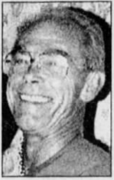


This page and the next contain a chronological listing of all 278 Napoleons. The 48 Honorary Napoleons are on separate pages. During his term as Gasogene, Frank Mentzel began a project to collect photographs of all Napoleons, which we have added to. The current Gasogene decided that while photographs are good, it would be better to know something about the folks in the photographs.
All known living Napoleons for whom we had addresses were contacted and asked to supply biographical information and photographs. Some replied that they did not wish to share data and we have respected those wishes.
We regret that for some Napoleons we had only their names and no addresses and subsequently are lacking biographical information and/or photographs. For others, including the deceased, we did the best we could utilizing publicly available sources such as newspapers, The Baker Street Journal, and ancestry.com to name a few. Please contact the Editors if you can supply additional data. If an entry for a Napoleon has been created by someone other than that individual, the contributor is noted at the end of the entry.
The interest in Sherlock Holmes is a great equalizer. We share that common fascination which is enhanced by our own unique personal and professional backgrounds. Researching those Six Napoleons who have passed beyond the Reichenbach has been fascinating as we learn more about those who contributed so much to establish the scion's history, and how the current membership is shaping how it moves forward and remains relevant. A society is nothing without its members.
Allen Robertson – I
The founder of the Six Napoleons, Allen Robertson was born and raised in Brooklyn. Passing the New York bar examination in 1912, Robertson led a private law practice and served as the attorney for a real estate firm in New York before joining the Baltimore and Ohio Railroad where he spent the remainder of his career, retiring in 1945.
A fan of the Sherlock Holmes stories since his childhood, Robertson corresponded with Arthur Conan Doyle and later Basil Rathbone and Nigel Bruce. He had a collection of over 50 Sherlock Holmes style pipes, along with an assortment of other Holmesiana.
He received his investiture of The Reigate Squires from the BSI in 1949 and was honored with a 2 Shilling award in 1970. Robertson passed away, at the age of 82, after a short hospitalization on January 22, 1972.
(Greg Ruby)
Paul S. Clarkson – II
Paul Stephen Clarkson was born October 2, 1905 in Worcester, MA. A graduate of Clark University in 1925 at the age of 19, where he was a member of Phi Beta Kappa, he was a 1928 graduate of the Harvard University Law School. He began practicing law in New Jersey before moving to Baltimore in 1929 where he became a trail and research attorney for Baltimore Power and Light. Clarkson served as a Navy Lieutenant from February 1943 until April 1945 and returned to his previous employer where he stayed until his retirement in 1969. During his time in Baltimore, he belonged to the Baltimore Bibliophiles and The Round Table, a law club. He “contributed more than 200 columns to the magazine section of Sunday’s editions of The Sun, in which he compiled quotations from Shakespeare that appeared to deal with subjects of current interest, such as baseball.” He relocated to Holden, MA after his retirement and subsequently worked as Clark University in Worcester, MA as curator of rare books and special collections for ten years. While at Clark he edited the library publication The Goddard Biblio Log and was awarded an honorary doctorate. He belonged to the Bohemians in Worcester and the Worcester Shakespeare Club.
During his days at Harvard, he began collecting O. Henry (William Sydney Porter) materials. In 1952 he was cited as having “the second largest collection of O. Henryana in the world next only to Harvard University’s” and was a frequent lecturer on the author. In 1938 his A Bibliography of William Sydney Porter was published. In 1952 he co-edited The Law of Property in Shakespeare and the Elizabethan Drama. He also collected several Maryland authors. His book Luther Martin of Maryland was published in 1970.
In addition to his role as co-founder and first gasogene of The Six Napoleons, Clarkson was awarded the investiture of “The Red Leech” from the Baker Street Irregulars in 1956 and the Two-Shilling Award in January 1975. He contributed his essay “In the Beginning” to the October 1958 Baker Street Journal, and “A Scandalous Case of Identity” to the December 1969 issue. In November 1971 he was associated with the new scion Students in Scarlet of Clark University. Clarkson died June 30, 1988 in Holden MA.
(Julie McKuras)
James T. Hyslop, O.B.E. – III
James Telfer Hyslop, the son of a member of the 5th Northumberland Fusiliers, was born September 21, 1916 in Corbridge England. He joined the Royal Navy Volunteer Reserve in August 1939 and went into active duty as an officer during the war. “While his ship was being repaired at the Brooklyn Navy Yard during World War II, a young Royal Navy officer ventured ashore and met the girl he would marry.” Post-war he was appointed as the British Vice-Consul in Baltimore and in the years immediately following, he was a frequent speaker at various events, particularly addressing the economic conditions in England. He held subsequent posts in Curacao, Bahrain, Honduras, Chile, Bogota Columbia, Pittsburgh, and San Francisco before taking the position of British Consul General in Detroit in 1971. He described his responsibilities there as “essentially a trade mission…More exports flow into Detroit from Britain than any other European country…And we send more goods to Detroit than any other U.S. port of entry.” In 1968 Hyslop was named an Officer of the Order of the British Empire (OBE). He also served in Johannesburg South Africa.
At the very first meeting of the Six Napoleons in August 1946, Hyslop was given the post of Commissioner. The April 1947 Baker Street Journal, which described him as “an acknowledged authority on the geography and folkways of London with particular reference to the purlieus of Baker Street,” carried his article “The Master Adds a Postscript”, and in October 1948 his “A Priori.” He attended the 1947 and 1948 Baker Street Irregulars dinners but left Baltimore in 1949 for a post in Curacao, N.W.I. where he planned “to create a scion there of the crew of the Dutch Steamship Friesland.” According to the British Diplomats Directory, Hyslop died in 1997.
(Julie McKuras)
R. Irving Paxton – IV
Randolph Irving Paxton was born December 8 1900 in Richmond, Va., and moved to Baltimore with his family during the early days of World War I. He attended city schools and was a 1918 graduate of City College. He received his engineering degree from McCoy College, the old Johns Hopkins University evening school. In 1937, he married the former Evelyn Sammons, who died in 1984.
Paxton spent his professional life as a civil and mechanical engineer working on such projects as Conowingo Dam during the 1920s for Pennsylvania Power & Light Co. Ambidextrous, he was known for his ability to work on highly detailed engineering drawings with either hand. He retired from his engineering career in the early 1970s. Paxton passed away on July 10, 1994, after suffering a stroke, at the age of 93.
(Julie McKuras)
Joseph H. Purdy – V
Joseph Harmon Purdy was born Aug. 7, 1907 in Kent Ohio. After his family moved to Baltimore while he was young, Purdy graduated from City College and began his career in 1924 with Baltimore Gas and Electric as a chemistry lab assistant. In 1929 he received a degree in English from Johns Hopkins University, the same year he transferred to the Customer Relations Department at Baltimore Gas and Electric. During World War II, Purdy served aboard aircraft carriers as a U.S. Naval intelligence officer and at the time of his discharge was a lieutenant commander. Returning to his pre-war employer and position and was named their first Public Relations Manager in 1960.
He was one the first six men to attend the first meeting of The Six Napoleons in 1948. A fellow Napoleon and employee at Baltimore Gas and Electric was Paul Clarkson. Both men were fans of Henry Fielding’s The History of Tom Jones, a Foundling and over a period of three months they pared the novel down to 10% of the original work in order to write a theatrical version. Mrs. Wilma Clarkson and Mrs. Genevieve Purdy aided them in their work and after nine months, in 1948 the difficult to stage play debuted in Seattle WA.
Purdy died on October 14, 1981. His obituary described him as a “long time civic leader.” He served as Vice-President and Director of the Baltimore Health and Welfare Council; as Trustee of Baltimore College of Commerce; Member of the Metropolitan Board of Directors for the YMCA for 22 years; as public relations consultant to the Maryland Academy of Science; Vice-President of the United Way of central Maryland; Chairman of the Baltimore Public Relations Council; and held various offices in the Baltimore area Red Cross.
(Julie McKuras)
Matthew R. Fairlie – VI
Matthew R. Fairlie was born Oct. 12, 1908 in Scotland. He attended school in Europe before graduating from the University of Chicago. Fairlie spent 40 years with Sinclair and Atlantic Richfield, serving as a research chemist and a senior research director for the last 18 years. After retiring in 1970 he moved to Sun City AZ. He had a special interest in race cars and became vice-president of the technical committee which inspects all of the Indianapolis 500 race cars. He was a member of the Masons, the Shriners, the Society of Automotive Engineers and the American Chemical Society. While living in Annapolis MD, he answered an ad in the Baltimore Sun in 1946 and was the sixth person to respond; he became a charter member of The Six Napoleons. He moved to Chicago in 1947 and joined the Hounds of the Baskervilles (sic) and founded Hugo’s Companions, holding office as Sir Hugo and later Idlest Companion, and was the winner of the Most Notable Companion in 1974 and 1984. When he moved to Arizona and found no scion societies in the area, he co-founded Moulton’s Prospectors in Arizona, serving as President, “The Nugget,” and later “Mine Boss.” Fairlie died on June 27, 1986 in Sun City.
(Julie McKuras)
Lloyd H. Denton – VII
Lloyd Hemsley Denton was born March 15, 1901 in Baltimore. He enlisted in the U.S. Army in April 1919 and served as a medic with the 17th U.S. Cavalry primarily in Hawaii until his discharge in May 1922. He returned to Baltimore and held positions in advertising and sales for several companies including Black and Decker before joining the Baltimore Association of Commerce in 1938. Within a year he was named director of the Convention Bureau. He would remain with the Bureau for the rest of his professional career other than during his World War II service as Director of the War Housing Center which provided housing for war-related workers. In 1968 he “brought together the tourist and convention bureaus of the Chamber of Commerce” as executive director, a post he held until his retirement in 1973. Denton was a director of the National Industrial Advertisers Association, treasurer of the Maryland Industrial Marketers, a member of the Advertising Club of Baltimore, American Trade Executives Association, the Maryland Historical Society, the Better Downtown Association, Better Business Bureau, and the Rotary Club. He was a Past Master of the Tuscan Lodge No. 202 Masons and a Board of Directors member of the National Sojourners and the American Foundrymen's Association.
In 1952 he was awarded the titular investiture of “The Noble Bachelor” and the 2 Shilling Award in 1974. He was among the first group of Napoleons awarded the Order of the Black Pearl in July 1970. One of his other major interests was the assassination of President Abraham Lincoln. He amassed a large personal library relating to the assassination and a failed attempt made at Calvert Station. His belief was Secretary of War Edwin Stanton was behind the murder of Lincoln because he wanted to assume the presidency.
Denton died on October 21, 1974. His obituary referred to him as “an indefatigable booster of Baltimore’s cultural and historical charms” and The Baker Street Journal noted he was “certainly one of the greatest disciples of Sherlock Holmes.”
(Julie McKuras)
John C. Heck – VIII
John Conrad Heck was born in Baltimore on December 11, 1907 and attended Baltimore City College and was a 1932 graduate of the University of Maryland Pharmacy School. In 1937 he graduated with honors from the University of Maryland Dental School.
Dr. Heck operated a private dental practice on Greenmount Avenue that spanned 45 years. During World War II, he closed his practice, but he reopened it in 1949, taking patients for the next 34 years, retiring in 1983.
He entered the Navy during World War II, serving in the Pacific theater with the rank of commander. Later, he served in the naval reserves with the 4th Marines Engineer Battalion.
For a number of years after the war, he worked for the Veterans Administration at the University of Maryland Medical Center, making artificial eyes of plastic.
In 1948, he traveled to Arizona to conduct research for the U.S. Public Health Service on the benefits of fluoride in the prevention of dental cavities. Heck passed away on November 20, 1993, in Baltimore.
(Greg Ruby)
James "Fitz" Brewer – IX
James Fitzgerald Brewer was born November 20, 1916, in Baltimore MD. He received his B.A. from La Salle University in 1938, his M.A. from Niagara University in 1939, and served in the Naval Reserves during World War II. In 1947 he was named an assistant professor of history at the United States Naval Academy and in 1948 began teaching at Loyola where he was a member of the Alpha Sigma Nu honor society. Brewer often spoke about the history of the Maryland 5th Regiment and addressed the Maryland Historical Society. “Mr. Brewer is the first person to have traced the history of the renowned regiment back to Revolutionary War days. His work was recognized recently by the War Department.” (Evening Sun, March 24, 1949) He wrote a Letter to the Editor in which he noted that he was “the official historian engaged to write the definitive history of the 5th Regiment” and recounted his two years of research utilizing the official War Department muster rolls, newspapers, documents, and diaries, letters. In 1955 his History of the 175th Infantry (Fifth Maryland) was published by the Maryland Historical Society. After leaving the Academy he became chairman of the social sciences division at Anne Arundel Community College. Brewer previously taught at Amherst College and Johns Hopkins University from 1947-1962. In 1967 he earned his M.A. at George Washington University.
Brewer received the investiture of Josiah Brown from the Baker Street Irregulars in 1979. In January of that same year he taught “The World of Sherlock Holmes” which was listed as the third seminar on the Sacred Writings that he conducted at Loyola.
Brewer died on July 14, 1987 in the Baltimore area. In his “Stand Upon the Terrace” fellow Napoleon Philip Sherman described him as “always our faithful protagonist of orthodoxy and purity of the Canon.”
(Julie McKuras)
Isaac S. George – X
Isaac “Ike” Stewart George was born October 28, 1882, in Baltimore. He graduated from Loyola College in 1901 with numerous honors and went on to earn his Master of Arts, then Bachelor and Master of Law from Georgetown University. He practiced as a lawyer until the onset of World War I when he entered the Coast Artillery. After completing officers training camp, he was commissioned as an infantry lieutenant in July 1917. In February 1918 he was promoted to captain and sent to France that June. When his military service ended in 1919, he was discharged with the reserve commission in major in the Infantry Reserve Corps, a rank he held until 1934. Upon his postwar return home, in 1922 he chose to enter the insurance industry acting as a general agent for the National Life Insurance Co. of Vermont until his retirement in 1939. (His February 28, 1963, obituary in the Baltimore Sun noted he described his early retirement was “Because he worked hard and saved money, because he inherited money, and because he married money.”)
George was an active athlete, religious and civic leader. A talented tennis player, he was a member and from 1909-1912, secretary of the Inter-City Team of the Baltimore Tennis Association, and from 1912-1917, an officer of the Maryland Club. He went on to become a skilled golfer as well.
A man who lived his deep Catholic faith, he attended mass daily. He was active with the St. Vincent de Paul Society as executive secretary from January 1943 until his death, and the Knights of Columbus where he served as state director for a number of years and director of Good Samaritan Hospital. In 1948 he was awarded the Carroll Medal from Loyola University, given to eminent alumnus, having served as Secretary and President of the Loyola Alumni Association. The 1961 Knights of Columbus state convention named him as their honored guest, referring to him as “the dean of Past State Deputies in Maryland.”
George was a member and leader of the Maryland Council of Defense during World War II, and Chairman of the Maryland Traffic Safety Commission from 1921-1948 and worked with the Baltimore Red Cross.
In 1951 he received the investiture of “The Veiled Lodger” from the Baker Street Irregulars. He died on February 27, 1963, in Baltimore. Upon his death, the St. Vincent de Paul Society noted that “Mr. George’s informal manner and his humorous references to himself did not succeed in hiding the depth of his faith, the sincerity of his convictions, and the constancy of his loyalties.”
(Julie McKuras)
Andrew H. Horn – XI
Andrew Harlis Horn was born July 22, 1914, in Ogden, Utah. His family moved to the Los Angeles when he was young, and he attended Santa Monica Junior College as a premed student and received his A.A. degree in 1935. He entered the University of California at Los Angeles where he was the Hattie Hellar Scholar in History in 1941 and worked as a research assistant, teaching assistant and lecturer in the early 1940s. Horn received three degrees in history from the University of California at Los Angeles; A.B., M.A., and Ph. D. in 1943 with highest honors in history. He joined the U.S. Army in November 1943 and assigned to the Educational Reconditioning Branch of the Medical Department, serving several months at Camp Butner. He was awarded the Army Commendation medal, discharged from the Army in 1946, and hired as Assistant Professor of History at Johns Hopkins University. He left Baltimore one year later to take a position as Senior Library Assistant at UCLA. In 1948 he received a BLS degree from the School of Librarianship at UC Berkeley and was named Assistant Head of Special Collections at UCLA where he developed archival and manuscript programs. He was named head of the Department in 1950. Horn was a “member of Phi Beta Kappa, Phi Delta Kappa, Pi Gamma Mu, Blue Key Society, Kappa Alpha Order, Mediaeval Academy of America, American Historical Association, American Association for the Advancement of Science, and the American Library Association.” In 1954 he took the post of Director of Libraries and Chairman of the Library Division of the University at Chapel Hill. He left the school in 1957 and took the position of Librarian at Occidental College. Horn worked with author and bibliographer Lawrence Clark Powell and organized the UCLA graduate school library in 1959. He then held the post of Dean from 1966 to 1974 and retired in 1978 as dean emeritus. Horn died May 25, 1983, in Los Angeles.
(Julie McKuras)
Richard W. Wotthlie – XII
Richard William Wotthlie was born June 15, 1912, in Baltimore. After graduating from Forest Park High School, he worked as a clerk but was laid off in 1933. He received guidance and assistance from the Baltimore YMCA and through them was able to find a job as “a storeroom boy at Union Memorial Hospital. Four weeks later [he] got promoted to working in the solutions laboratory where he stayed for twelve years manufacturing glucose, intravenous saline, and local anesthetics.” He later became a service representative “for one of the largest pharmaceutical supply companies in the business.”
He served as president of the Baltimore YMCA for at least four years, beginning in 1947. Wotthlie died March 17, 1971, in Baltimore.
(Julie McKuras)
Cyril A. Keller – XIII
Cyril A. Keller, Napoleon XIII and "The Colossal Schemes of Baron Maupertuis" BSI, 1951, was born in Baltimore on October 8, 1927, and grew up on Springfield Avenue in its Pen Lucy neighborhood. Smitten with books, especially Shakespeare and Sherlock Holmes, he graduated from the Baltimore Polytechnic Institute in 1945, and from Baltimore's Loyola College in 1949, where he wrote his senior thesis on "Sherlock Holmes and the Art of Detection." He became an early member of Allen Robertson's Six Napoleons, and eventually its Gasogene. While working some twelve years in the 1960s for the Chicago-based Great Books Foundation, he made his way in the world principally in the field of banking. But on his own time, he was also a legendary sleight-of-hand card-tricks magician in Baltimore's magic clubs, like Yogi’s Magic Mart on Charles Street. His Baltimore Sun obituary called Cyril a "Fred Astaire with cards," and remarked that: "The irony of a bank hiring someone who made things disappear was not lost on Mr. Keller, his family or, apparently, the bankers. He would always say 'They never let me near the money.'" Re: money, in 1949 the Baker Street Irregulars introduced the "Irregular Shilling" as its symbol of membership, and in 1951, when Cyril received his, Edgar W. Smith revealed in the January 1951 Baker Street Journal that the idea of the Shilling "as the insignia and talisman of Irregulars everywhere" had in fact been Cyril's, he having proposed it to the BSI's receptive Buttons-cum-Commissionaire in the autumn of 1948. In 1993 Cyril moved to Philadelphia to join the woman he loved and died there on September 9th, 2005.
(Jon L. Lellenberg)
David A. Weiss – XIV
David Ansel Weiss was born January 29, 1922, in Cumberland, MD, the son of Harvey H. Weiss, Honorary Napoleon XI. While a student at Johns Hopkins University he was Editor-in-Chief of the yearbook Hullabaloo, managed the wrestling team, belonged to Phi Epsilon Pi, and was active in tennis. He graduated with an A.B. degree in Chemistry and worked as a chemist for the Celanese Corporation before enlisting in the U. S. Navy during World War II. After the war he moved to Baltimore where he attended writing seminars at Johns Hopkins and worked as a book editor at the War Department, editing a book in a series on the history of the Corps of Engineers in the Southwest Pacific during the war. In 1949, encouraged by a letter from Edgar W. Smith in response to a pastiche he wrote, he moved to New York City to embark on a career as a free-lance writer. He had articles printed in Coronet and specialized in “supplying research data to ad agencies; manufacturers, banks, law firms and the like.” He is the author of The Great Fire of London in 1968 and The Saga of the Tin Goose in 1971.
David’s father Harvey was a well-known Sherlockian in Baltimore and introduced his son to the Canon. While working for the War Department he became increasingly interested in Holmes, reading Edgar W. Smith’s Profile by Gaslight and The Baker Street Journal at Baltimore’s Pratt Library. He submitted “The Celestial Pastiche” to Smith and it appeared in the April 1948 Baker Street Journal. After moving to New York, he became involved with the Baker Street Irregulars, meeting with Edgar W. Smith. He received the investiture of “Crosby the Banker” from the Baker Street Irregulars in 1958. Allen Robertson, Napoleon I, encouraged him to join The Six Napoleons.
(Julie McKuras)
John C. Carter – XV
Carl S. Bassett, Jr. – XVI
Carl Bassett was born January 26, 1911 in Baltimore, MD and raised in Ocean City NJ. Educated at Lafayette College, after he received a doctorate in history from Johns Hopkins, he graduated from the University of Baltimore Law School and began practicing law in 1940. He enlisted in the U.S. Navy in 1943 and returned to his legal practice after the war. In the late 1940s he became active with the United World Federalists of Baltimore and as vice president, represented the group at the World Federalists’ congress in Luxemburg in 1948. That same year he was selected as president of the new Uplands Community Association, whose membership consisted mostly of veterans interested in improving their area. Politically he described himself as “a conservative in economics, but a liberal when it comes to civil rights.” Bassett was elected chairman of the Maryland branch of the American Civil Liberties Union in 1950. He taught for a time at Towson State University and beginning in 1971 taught political science at the Anne Arundel Community College. He was past master of the Concordia Lodge No. 13 of the Masons and belonged to the York Rite and Boumi Temple.
He was active in several sports, belonging to two different tennis clubs and also taught swimming and scuba diving at the YMCA. At one time he flew private planes and was a member of the United States Power Squadron.
In addition to belonging to the Six Napoleons, he was present for the inaugural meeting of the new scion The Carlton Club in 1976. He received the investiture of “Josiah Brown” from the Baker Street Irregulars in 1977.
Bassett died on August 30, 1977 in Baltimore MD. The Baker Street Journal carried news of his death, describing him as “a serious and sincere Sherlockian.”
(Julie McKuras)
Robert L. Smith – XVII
In a January 8, 1949 Evening Sun article about the Six Napoleons, member Robert L. Smith was listed as a contract attorney for the Veterans Administration.
(Julie McKuras)
Robert France – XVIII
Robert France was born November 2, 1896, in Baltimore. He attended Boys’ Latin School and graduated from Johns Hopkins University with a B.A. During World War I, he served in France with “the American Field Service in the French Army as an ammunition truck driver. Later he was graduated from the French officers’ school and continued to serve with the French Army as commanding officer of an ammunition train.” Postwar, he entered the University of Maryland Law School and received his law degree in 1923. A member of the United Railways Company trial staff, he joined a law firm before entering individual practice. He served as secretary of the Bar Association of Baltimore for nine years before being selected as president in 1939. That same year he was appointed chief magistrate of the Baltimore Traffic Court. When the U.S. entered World War II, France was granted a leave of absence from his court duties and assumed the role of executive director of the Maryland Council of Defense, taking over from Isaac George. During the war years he served as chairman of the Maryland State Tax Commission for almost three years, beginning in 1943, was a member of a commission on the redistribution of state revenues, was general counsel of the Public Service Commission, and in 1945 was appointed chairman of the public division for the Red Cross War Fund. In December 1946 he was appointed to fill a vacancy on the Supreme Bench of Baltimore and was elected in 1948 to a fifteen-year term.
In 1951 he was among the Six Napoleons who attended the annual Baker Street Irregulars dinner. Judge France died suddenly on November 28, 1952, at his home in Baltimore. He was remembered “expansive and joyous, a generous host with a full understanding of the traditions of Maryland hospitality” as well as for his “high degree of human sympathy, a zest for the good things of life and a sense of humor.”
(Julie McKuras)
George R. Tullis – XIX
George Raymond Tullis was born January 3, 1919, in Watseka, IL. He was raised in Lafayette, IN and enlisted in the U.S. Coast Guard in November 1939. Tullis served aboard the U.S Coast Guard cutter Hollyhock which patrolled Lake Michigan and in May 1941 Yeoman Third Class Tullis’s interest in mystery fiction was rewarded when he was named a winner of a Detective Story magazine contest in May 1941 for his solution to a serial which appeared in the magazine. During WWII, his ship was transferred to the New York area to conduct sea duty. While stationed there, he volunteered his services to help someone in need and was matched as a reader to a young blind woman named Helen. His goal was to help her be as independent as possible and two months later they were married. The couple moved to the Baltimore area after the war where Tullis acted as secretary to the commandant of the Coast Guard. Helen began using a seeing eye dog while living there; her first dog was killed when he pushed her out of the path of an oncoming truck. With her husband’s encouragement she became active in television programming where she conducts cooking programs and was named the outstanding woman in radio and television for 1953. Tullis joined the Six Napoleons and was an attendee at the July 7, 1955, séance. He spent twenty years in the Coast Guard before joining the Social Security Administration as a disability examiner. Bill Rabe, in his book 1961 Who’s Who & What’s What noted that Tullis’s specialty was “dogs in the Canon.” In 1978 the couple moved to Florida. Tullis died December 15, 2002, in Largo, FL.
(Julie McKuras)
Thomas H. Sherlock – XX
Thomas Henry Sherlock was born April 28, 1924, in Baltimore. Growing up in a small apartment after his father’s illness and subsequent death, he attended McDonogh School in Owings Mills on an orphan’s scholarship. He graduated from there in 1942 and enlisted in the Army Air Corps where he flew B-24 bombers but the war ended before he was deployed to the Pacific theatre. Upon his discharge as a second lieutenant in December 1945, he attended the University of Missouri where he majored in journalism. After graduating in 1948 with a degree in advertising and public relations he went to work for the Armstrong Corp. then Fidelity and Deposit Co. of Maryland. He joined Blue Cross of Maryland in 1958 in the post of Director of Public Relations. His role expanded until he was named Vice President, then CEO and President in 1973. Sherlock was at the helm as Blue Cross moved toward a consumer-oriented approach and undertook a merger with Blue Shield that would take almost five years and was completed in late 1984. His obituary noted that despite the difficulties of the merger, he “pressed onward with a belief that consolidation would help families afford health insurance. It was a mission rooted in his own impoverished boyhood.” After his retirement he toured Europe and Africa with his wife. He was interested in Gilbert and Sullivan, Shakespeare, and making handcrafted Halloween masks in addition to Sherlock Holmes. Sherlock died October 11, 2016, in Baltimore.
(Julie McKuras)
Glenn Bramble – XXI
Glenn Crosley Bramble was born June 23, 1902, in Denver. A graduate of Harvard University in 1923 and Harvard Law School, he practiced law in Boston, New York and Paris before joining the Maryland Casualty Company in 1934 as an attorney. He rose through the ranks to the position of Vice President and Secretary in 1955 and was known as a specialist in corporate banking and securities. He was a member of the Maryland and Massachusetts bars as the Baltimore and Boston Bar Associations. His interests were varied, and he was often called upon as an authority on the constitutions of the clubs he belonged to. Those clubs included St. George’s Society, where he was past president; the Harvard Alumni of Maryland; University Club; the Baltimore Civic Opera; the English Speaking Union; the Merchants Club; the American Society of Corporate Secretaries; Churchmen’s Club; Baltimore Stock Transfer Association; and the Wine and Food Society. He was a director of the Baltimore Symphony Orchestra Association and with his wife, was very active with the Paint and Powder Club. Bramble belonged to the Baltimore Association of Commerce and chaired the national affairs committee 1957-1961 and was the “principal speaker for the several years at the Maryland congressional dinner at the United States Chamber of Commerce conventions in Washington.” Bramble died on August 8, 1963 while vacationing in Quebec, Canada.
(Julie McKuras)
G. Joseph Sills, Jr. – XXII
George Joseph Sills, Jr. was born September 27, 1930 in Lima, OH and moved to the Baltimore area in 1941. A 1952 graduate of Loyola College, he was named the first Fulbright scholar from Loyola and “studied English at the University of Leeds in England.” He entered Georgetown University Foreign Service School and “served a stint in the Army, then returned to Maryland to earn a law degree at University of Maryland in 1960.” Beginning in 1963, Sills’s work with the law practice of Lord, Whip, Coughlan and Greene was almost exclusively workers’ compensation cases. He also worked with the city’s sign commission as chairman. In 1979, Gov. Hughes of Maryland appointed Sills to the state Workmen’s Compensation Commission.
Sills belonged to “two Scottish bands, the Baltimore City Pipe Band and the Na Finna Pipe Band.” He was also a member of the United Empire Loyalists, the English Western Society, the Little Big Horn Association, the Trial Lawyers Association, and Ducks Unlimited. He was noted for his writing about the Battle of Little Big Horn and the talks he gave about Sherlock Holmes. Sills was president of the parish council at the Cathedral of Mary Our Queen as well as the Fifth District Reform Democrats, and the Roland Park Little League.
(Julie McKuras)
Dr. Milton C. Lang – XXIII
Dr. Milton Charles Lang was born October 7, 1899, in Baltimore. He graduated from Polytechnic Institute and Mt. Vernon College prior to his 1922 graduation from the University of Maryland where he was a member of the Phi Chi Medical Fraternity. In 1923 he was appointed as a resident physician at the Maryland Penitentiary. A talented musician, he was the organist at St. Matthew’s Evangelical Lutheran Church. He married fellow congregation member Lillian Barner and after their 1924 marriage, the couple were commissioned as medical missionaries in India where they spent four years. Upon their return to Baltimore, he practiced general medicine and according to his “Stand with me here upon the terrace…” in the September 1985 Baker Street Journal, “for many years he taught at the University of Maryland Medical School… [and was] A member of the Royal Society of Tropical Medicine.” He retired from medical practice in the late 1970s. He was known as a stamp collector and was a member of Mt. Vernon Lodge No. 151 A.F. and A.M. (Ancient Free and Accepted Masons).
He was a member of the Six Napoleons for over 35 years and in 1953 he received the titular investiture of “The Abbey Grange” from the Baker Street Irregulars. He contributed his essay “A Study in Heredity” to the June 1964 Baker Street Journal.
Lang died on February 6, 1985. Fellow Napoleon Philip Sherman wrote that Lang was “a kind and gentle man who loved people and books, and his talents and enthusiasm made him one of our finest Sherlockian scholars.
(Julie McKuras)
Dr. George E. Wells, Jr. – XXIV
Dr. George Edward Wells, Jr. was born on October 1, 1922, in Maryland. He served in the army Reserve and after attending Baltimore City College and John Hopkins University, he graduated from Johns Hopkins Medical School in 1951. Wells established a medical practice in Baltimore in 1955 and later served as an assistant professor of gynecology and obstetrics at Johns Hopkins.
From 1970-77 he was the director of education for obstetrics-gynecology at Maryland General Hospital. In 1967 he was named the first auxiliary physician of the Baltimore Fire Department and worked for eight years as a physician with the Baltimore Police Department helping to treat rape victims.
His wife Betty was an NBC News illustrator and together they prepared “magnificent linoleum-block Sherlockian prints” which were often used as gifts at Six Napoleon events. He received the investiture of “The Paradol Chamber” from the Baker Street Irregulars in 1958 and in July 1970 was one of the original recipients of the Order of the Black Pearl. In 1980 they moved to Virginia Beach VA where he died on November 14, 1985.
(Julie McKuras)
Rt. Rev. Thomas A. Whelan – XXV
Rt. Rev. Thomas Augustine Whelan was born Feb. 8, 1906, in Baltimore MD. He graduated with a B.A. from Princeton University in 1928. According to a newspaper article in the Baltimore Sun on Nov. 29, 1949, after graduation he “made his theological studies at the University of Innsbruck, Austria, and at the International College, Sion, Switzerland. He was in Austria at the time of the Anschluss and was in France when France surrendered” in June 1940. In late 1941, Whelan, then the assistant at St. Mary’s Catholic Church, Govans, addressed the Rotary on the subject of how the Anschluss came to Austria. He was listed as a “former professor at Loyola University” in a Feb. 26, 1950, article, and in November 1959 was named senior assistant at Baltimore’s new Cathedral of Mary Our Queen. George Weigel, Distinguished Senior Fellow and William E. Simon Chair in Catholic Studies published an article on July 5, 2017 for The Ethics and Public Policy Center in Washington DC. He remembered “Msgr. Thomas A. Whelan, my pastor when I was growing up in Baltimore, was a striking character: Princeton friend of F. Scott Fitzgerald; former Wall Street broker; high-ranking Army chaplain in World War II [He achieved the rank of Lt. Col by January 1947]; world traveler; founding rector of the Cathedral of Mary Our Queen.” He was named Rev. Monsignor and served as Rector Emeritus of the Cathedral of Mary Our Queen.”
In 1955 he received the investiture of “The Vatican Cameos” from The Baker Street Irregulars. Whelan was a member of Baltimore’s English-Speaking Union; served as the long time Chaplain for St. George’s Society of Baltimore; was active in Baltimore’s Catholic Charity; and served as a Chaplain for the Baltimore Fire Department. Rev. Whelan died on April 21, 1987, in Baltimore.
(Julie McKuras)
Arthur C. Tiemeyer – XXVI
Arthur Charles Tiemeyer, M.D. was born August 6, 1898, in Baltimore, MD. He was the son of German immigrants, and his obituary noted that “he was reared and educated in Germany before returning” to the United States. His military records indicate he was inducted “10/21/18 pvt, SATC, Univ. of MD” and honorably discharged in December 1918. He attended City College and graduated from the University of Maryland medical school in 1919 where it was noted he was “quiet and unassuming.” Tiemeyer acted as head of the obstetrical department of Maryland General Department for one year before going into private practice in obstetrics and gynecology in 1920 and served in the West Baltimore Medical Association in various posts for a number of years. Tiemeyer later acted as Chief of the Obstetrical Staff at West Baltimore General Hospital until November 1937. He was on the staffs of several area hospitals. A member of the Adherence Lodge of the Masons and the Scottish Rite, Tiemeyer joined The Independent Order of Odd Fellows in 1918 and held local and state offices in the organization before being selected as Sovereign Grand Master of the Sovereign Grand Lodge which covered 26 countries in 1947. He retired from medicine in 1962 and spent the last twenty years of his life at the Maryland Odd Fellows Home. Tiemeyer died on December 8, 1980.
(Julie McKuras)
James H. Bready – XXVII
James Hall Bready was born February 20, 1919, in Philadelphia. His family moved to southern New Jersey where he attended school before receiving his B.A. in history from Haverford College in 1939. His yearbook entry for 1939 describes him as modest, the “most consistently outstanding performer” in track and field, and a member of the Glee Club. He followed his B.A. with an M.A. from Harvard in 1940. As William Hyder wrote in The Winter 2011 Baker Street Journal, after graduation Bready “wrote to the then-president of Haverford (former editor of the Washington Post) Felix Morley for help finding a job in journalism. Morley responded with a list of colleagues around the country.” Following in his parents’ footsteps – both were employed at the Philadelphia Ledger – he worked as a copy boy for the Philadelphia Evening Bulletin, and then went to work on the copy desk of the Des Moines Tribune and the Washington Post. When the U.S. entered World War II, he served in the U.S. Army’s Counterintelligence Corps for almost five years in the European Theater, “seeing Europe from Scotland to Czechoslovakia” according to the report from SABR. The day after he was discharged, on November 5, 1945, Bready began his career with the Evening Sun as copy editor.
He spent forty years as a journalist for the Baltimore newspaper as a copy editor, reporter, editorial writer, feature writer, and columnist. In 1948 he founded the Sunpapers’ Unit of the Newspaper Guild and in 1954 began writing his “Books and Authors” column which ran until 2005, long after his 1985 retirement from the paper. He was the book editor for the Evening Sun 1968-1979, editorial writer from 1951-1985 and was noted as the “longest-running columnist on the three papers” according to the history of the Baltimore Sun. Although he never covered sports, he was known for his articles on Baltimore baseball. From 1954 until 1984 Bready was the Baltimore “correspondent for Time, Life and Fortune magazines, and [was] Encyclopedia Britannica’s designated writer for its entry on Maryland.” Pulitzer Prize winner Russell Baker wrote about meeting Bready in his autobiography:
He was James Bready, one of the Evening Sun’s brilliant cadre of feature writers…Bready was major league. The imagination, wit, and graceful lilt of his writing made him one of the glories of the Evening Sun.
Bready served on editorial board of the Maryland Historical Magazine and in 1990 wrote “Maryland Rye: A Whiskey the Nation Long Fancied—But Now Has Let Vanish,” described in his obituary as “the first detailed study of pre-Prohibition Maryland rye whiskey.” He was a longtime member of the Baltimore Antique Bottle Collectors Club and had a large collection related to Maryland rye.
Bready authored a history of his church, the Episcopal Church of the Redeemer, in This Parish Under God, in 1955, The Home Team about Baltimore baseball in 1959, and Baseball in Baltimore in 1998. He and his wife attended the Baltimore Orioles’ Opening Day in 1954 and had a long run of attending every opener. In 1971 he was the first Marylander to join SABR, the Society for American Baseball Research and received their salute in 1986. Bready was the founder in 1960 of the Orioles Advocates and was a board member of the Babe Ruth House.
With his wife Mary, the couple hosted a well-known Christmas party with many of Baltimore’s social, artistic, and political citizens in attendance. Drawing on his early interest in sports, Bready was also known for his continued athletic activities such as running and biking.
Mr. Bready served as the Gasogene of the Six Napoleons 1954-55 and was invested in The Baker Street Irregulars in 1955 as "The Disappearance of James Phillimore."
James Bready died on October 29, 2011, in Baltimore. He was called the “Dean of Baltimore editorialists.” Stephen H. Sachs, the former Attorney General of Maryland, wrote about his fellow Haverford Alumnus shortly after Bready’s death and cited that he was “a journalist who captured with near perfect pitch the quirkiness of the city he loved.” Although their graduation dates were separated by sixteen years, Sachs saw Bready at a number of university events, calling him “a devoted and loving son” of Haverford. He felt “that Jim’s values – his intellectual honesty, his gentleness in a brutal world and the attention he paid to those he saw as undervalued and unappreciated – were shaped in Haverford’s Quaker teachings and perhaps, in the silence of its Fifth Day Meeting.”
The James Hall Bready Collection of papers, books, and materials relating to his career is held at The Albin O. Kuhn Library, University of Maryland, Baltimore County.
(Julie McKuras)
George L. Howe – XXVIII
George Locke Howe, “a member of the distinguished Boston literary clan,” was born April 19, 1898, in Bristol, RI. He graduated from Harvard in 1918 magna cum laude and taught for a short time. A member of the Naval Reserves beginning in 1917, he served overseas in World War I before returning to Harvard where he earned his master’s degree in architecture in 1924. In the early 1930s he moved from Providence RI to a 260-acre farm in Howard County, MD so he was close enough to Washington DC where he worked as an architect. During that career he “designed and supervised the construction of more than 600 public and private buildings during his architectural career.” In World War II he served as an officer in the O.S.S. with the “Seventh Army, in Algeria, France and Germany, exploring coastal defenses and providing documentation for US agents behind enemy lines. He held the rank of lieutenant colonel. After the war he received The Medal of Freedom Award from President Truman.” Within a few years, he turned to writing while recovering from a serious automobile accident. The result was the book Call it Treason, which was made into the film “Decision Before Dawn.” His second book was Mount Hope. He also wrote for New Yorker, Harper’s, American Heritage, and Atlantic Monthly. He later moved to Scottsville, VA. Howe died June 19, 1977, in Salem, VA.
(Julie McKuras)
Joseph E. Hall – XXIX
Joseph Eldon Hall was born November 13, 1920, in Morgantown, West Virginia. Hall, whose father was a Cornell University professor, worked at the Cornell University Library while taking classes there and was a member of Delta Phi Alpha. In 1941 he received his bachelor’s degree in Arts and Sciences and a master’s degree in 1942. On November 13, 1942, he enlisted in the U.S. Army and served in the the Army Air Corps. After his 1944 discharge he went to work at the Library of Congress. A member of the Red Circle of Washington, he addressed the group in 1952 to discuss a collection of Holmesiana. His poem “In Memoriam-Edgar W. Smith” was published the September 1962 Baker Street Journal and he was listed as the Director, Technical Services Division, National Aeronautics and Space Administration. Hall died on May 25, 1965 in Bethesda MD and is buried in Arlington National Cemetery. At the time of his death, he was the Assistant Chief of the general reference and bibliography division at the Library of Congress.
(Julie McKuras)
William L. Henderson – XXX
William Lynn Henderson was born in Philadelphia on December 8, 1894. His family moved to Maryland in 1908, and he received his bachelor’s degree from the University of Virginia in 1914. During World War I he held a commission as ensign in the U.S. Naval Reserves. He graduated from Harvard Law School in 1919 and admitted to the Maryland Bar that same year. He began his legal career at the firm of Stuart and Pearre and in 1929 helped organize the law firm of All, Henderson and Freeman. In 1931 he left private practice when he was named a state assistant attorney general. He held that position until 1938 when he was named deputy attorney general. He was admitted as a member of the United States Supreme Court in 1935 and in 1937 was a member of the executive council of the Maryland State Bar Association. Based on his work in writing and defending the state income tax law he was named chairman of the State Tax Commission in 1941 and in 1943 was selected as judge of the Supreme Bench of Baltimore City. In 1944 he was named an associate judge of the Court of Appeals and in 1946 was elected to a 15-year term on the Court of Appeals. He was reelected in 1961 and retired from the bench in 1964, earning the description of “an advocate of judicial restraint.” Post retirement, he took permanent residence at his summer home on Gibson Island. Henderson was an avid sailor and was referred to as a “Baltimore yachtsman” for many years. Henderson died on March 23, 1984.
William Stump – XXXI
William Stump was born May 11, 1923 in Orange, NJ and graduated from St. James School in Hagerstown. His family reported that although an eye defect prevented him from serving in the military he “volunteered for the American Field Service and drove an ambulance throughout the Middle East, Italy, France and Germany. He followed British and French troops and picked up casualties of war.” Postwar he lived in New York City where he edited The Villager and in 1949 joined The Baltimore Sun. He wrote many articles for the Sun Magazine under his own name as well as James C. Bertram and Henry Rauch. His subjects included how the origins of Baltimore street names…local history…Baltimore’s last gas lights, the Maryland Club and Clifton Park.” He had an interest in archery, which he took up to strengthen his weak eye, and started two archery magazines, Eastern Bow Hunter and Archery World. He resigned from The Sun in 1958 and took the editor’s position at Baltimore’s Gardens, Houses and People. Six years later he was named as editor of Baltimore magazine, a publication of the Chamber of Commerce. In 1970 the magazine was made available for sale on newsstands and Stump noted he felt that “the magazine is part of the media of Baltimore and as such should report facts and situations as they are.” That belief led to articles on subjects considered controversial such as the local homosexual community and Johns Hopkins University financial problems, and his firing from his post in 1972. He “was immediately hired at the News American, the Hearst afternoon daily, where he directed the editorial page and wrote editorials until the paper’s closing in 1986. He then became the editor of Maryland Church News, published by the Maryland Episcopal Diocese. He was known for his enthusiasm for his work, good humor, decency, “unflappable personality,” and able editing. Stump was a member of the Oriole Archers, the Hamilton Street Club and “the Drones and Diogenes Club.”
Stump died on October 20, 2013, in Towson, MD. His body was donated to Johns Hopkins Hospital for eye research.
(Julie McKuras)
Jacob Hay – XXXII
Jacob Hay V was born October 2, 1920, in York, PA. A graduate of Pennsylvania State University in 1941 with a major in Greek and Latin, he was a member of Alpha Sigma Phi and the Liberal Arts Student Council. On October 10, 1941, he enlisted in the U.S. Army and served in England for months before D-Day then throughout France and Germany, eventually reaching the rank of captain. He was decorated for infantry and intelligence service, including the Bronze Star. Discharged in May 1946 he took classes at New College, Oxford where he met and married his wife, Joy.
His first job in newspapers was as a reporter for his hometown paper, The Gazette and Daily in York but moved on to a feature writer position at the Evening Sun in 1947 until 1950. His columns were often humorous, including “Mr. Peep’s Diary.” He was a member of the original news staff that broadcast over WMAR-TV. In 1952-54 he was recalled by the Army for service in the Korean conflict until his discharge when he became an editorial writer for the Greensboro NC Daily Gazette. He left the newspaper field in 1954 to work as a public relations director for the Baltimore and Ohio Railroad, and in 1958 was named chairman of the Railroad Community Committee of Baltimore before leaving the railroad. That same year one of his short stories was made into a film titled “The Sheriff of Fractured Jaw” starring Kenneth More and Jayne Mansfield. He wrote stories for Colliers, the Saturday Evening Post, Holiday, Argosy, Adventure and Playboy in addition to numerous stories published in Ellery Queen Mystery Magazine and their anthologies from 1953 through 1975. A staff member from 1958-1961 with National Geographic, he officially became a freelance writer in 1961 and worked on projects for the World Book Encyclopedia, the Maryland Port Authority, the U.S. Army, and NASA. In the late 1960s he was a television critic for the Baltimore News American.
Hay wrote several books including the 1961 situation comedy The Bomb in the Attic; The Mindleberg Papers about a Civil War Centennial celebration published in 1964; and co-wrote Autopsy for a Cosmonaut with John Keshishian in 1969. He acted as editor the book Gemini! A Personal Account of Man’s Venture into Space, the memoirs of the late astronaut Virgil “Gus” Grissom, whose father had been a signalman for the Baltimore and Ohio Railroad. The book was published posthumously in 1968 with the approval of Grissom’s widow.
Hay and his wife moved overseas for a period, traveling throughout Europe before settling in his wife’s native England. As they prepared to leave the U.S., his friend James Bready wrote of his departure that there was “no consolation beyond the off chance that his travels will yet bring Jay Hay this way again.” And they did; the Hays eventually returned to the Baltimore area. Jacob Hay died there on May 3, 1976.
(Julie McKuras)
Ralph P. Reppert – XXXIII
Ralph Paul Reppert, the son of a coal miner, was born on March 24, 1916, in Buckhannon WV. While a high school student he worked on a weekly newspaper. He attended West Virginia University and his World War II draft card indicates his address was in Buckhannon and employer was Calvert Distillery. In 1941 went to work for Sunpapers “at various times as a crime reporter, copy editor and feature writer” as well as covering the military troops stationed in the U.S. He transferred to The Sunday Sun in 1947. During that time, he concentrated on writing humor columns with subjects such as diaries, the Baltimore Orioles, his Grand Order Odd Balls (G.O.O.B.) lodge, his will, chicken broth, Christmas stamps and everything in between. His columns were also occasionally published in magazines such as Good Housekeeping, Look, The Saturday Evening Post, and Reader’s Digest. A frequent subject of these columns was his wife, Harriet. Oddly enough, he never had a wife named Harriett – he did have wives named Ruth and later Barbara – but the experiences he recounted were often based on his real experiences. His 1963 book Ralph Reppert and His Electric Wife republished some of the columns.
Always quick witted, he was known for his self-deprecating humor and was a popular speaker at various events and on WMAR-TV. One remembrance of him recalled his appearance on “the same banquet program with that other eminent Appalachian emigre, Blaze Starr. [the famous burlesque dancer known for her affair with Louisiana Governor Earl Long] Striking with his usual speed and aplomb, Ralph notified the audience of a deal: Miss Starr would be serious, and he would keep his clothes on.” He also authored more sober pieces such as the The Kennedy Assassination: A Different View published in the May 1 and May 8, 1977 issues of The Sun Magazine, The Sun’s Sunday supplement. He was the Sun Magazine’s last original staff member.
Reppert was active with the Lutherville-Timonium Lions Club, serving as secretary-treasurer, and was a volunteer with the Boy Scouts of America at one time.
In 1966, Reppert received the appropriate investiture of Horace Harker from The Baker Street Irregulars. He died on October 1, 1979, in Baltimore. His fellow Napoleons Philip Sherman and Steve Clarkson contributed memories of him to the October 28, 1979, Baltimore Sun, noting his “homebaked humor” and his “delightful discourses, his charm, his wit, his enthusiasm; but most of all, I believe, we will miss Ralph.”
(Julie McKuras)
L. Wethered Barroll – XXXIV
Lewin Wethered Barroll was born November 22, 1888, in Chestertown. He was a student at Chestertown College then received a B.A. from Yale University in 1910. Barroll went on to Johns Hopkins University and the University of Maryland Law School where he received his M.A. and Bachelor of Laws the same year. He went into private practice with his father in Chestertown and organized the First Company of Coast Artillery in the Maryland National Guard in 1916. The following year he enlisted in the U.S. Army as a Captain and after completing artillery training, he took command of a heavy artillery unit at New Jersey’s Fort Hancock. He was awarded Serbia’s World War I medal The Order of Saint Sava for military merit. Postwar, he returned to Baltimore and a private practice. He acted as head of the Roosevelt-Garner Citizen’s League during the 1932 and 1936 presidential campaigns and was noted as a civic leader. He continued practicing law until a 1968 stroke caused him to retire.
Barroll turned a portion of his personal estate into a game preserve after he personally fed ducks along the Eastern shore for more than 50 years. He was a member of the Sons of the American Revolution, tracing his ancestry through his mother’s line, the Wethereds. He died on February 2, 1969, in Baltimore.
(Julie McKuras)